.png?width=200&height=50&name=Untitled%20design%20(21).png "Untitled design (21)")

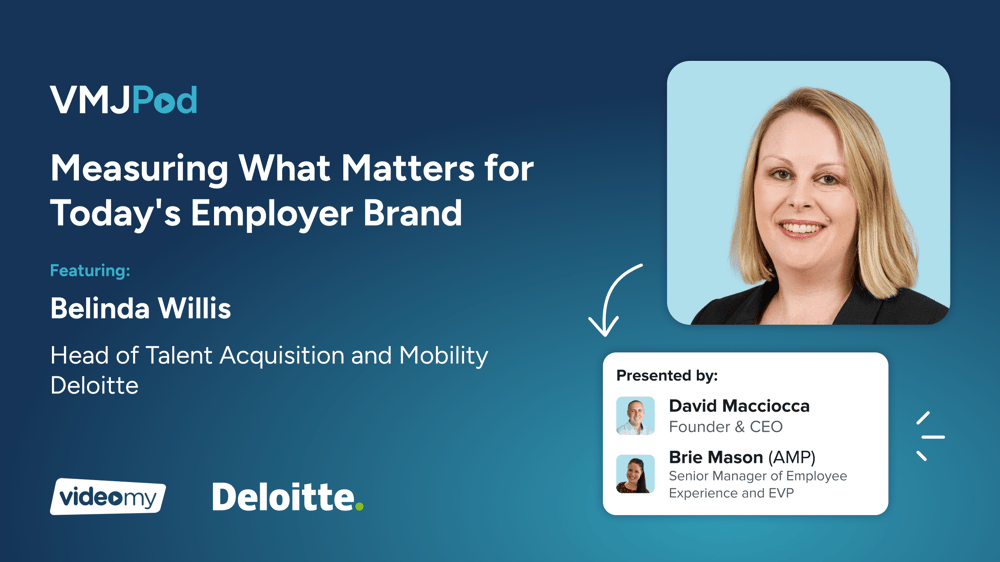
When Belinda Willis, Head of Talent Acquisition and Mobility at Deloitte, talks about employer brand, she doesn't mince words. For her, it's not a nice-to-have marketing function—it's the cornerstone of effective talent acquisition. In a recent episode of the VMJ Pod's employee brand series, Belinda shared why employer brand deserves a seat at the leadership table and how it transforms reactive hiring into proactive attraction.
🎥 Watch the Episode 🎧 Listen to the Podcast
From Cost Centre to Strategic Investment
One of the biggest challenges employer brand teams face is proving their worth. Belinda's approach? Track everything and tie it directly to ROI. "Everything for me and my team needs to have an ROI," she explains. "If we can prove the worth that we're actually able to bring, it becomes a very different conversation with the business."
At Deloitte, Belinda's team tracks metrics from click-through rates all the way through to hire, then compares these results to agency spend. The conversation with business leaders shifts dramatically when you can demonstrate cost-per-hire advantages.
"When you're talking to the business, that's what resonates with them, especially if they're funding it," she notes. In most cases, the response is simple: "It's a no-brainer. Just keep it going."
The Power of Collaboration
Belinda's employer brand team doesn't operate in a silo. Instead, they work collaboratively with recruiters, strategic sourcing teams, and business stakeholders throughout every stage of the talent acquisition process. "We're collaborative right from whether it's an ad, whether it's a video, in terms of that storytelling, it's the whole process through," she says.
This integration means employer brand professionals attend fortnightly meetings with recruitment teams, sharing results from campaigns and demonstrating real-time impact. The effect is tangible.
"You can see people's eyes sort of light up to hear what the EB team have been up to and the results that they're getting," Belinda observes.
Moving from Reactive to Proactive
Perhaps the most compelling argument Belinda makes is how employer brand fundamentally changes the nature of talent acquisition. "It moves you from being reactive to proactive," she emphasises. "It moves from that reactive hiring to proactive attraction."
This shift is particularly valuable when building talent pools—one of the most underutilised opportunities in recruitment. Belinda's team captures candidates from campaigns who aren't hired immediately, including silver medalists, and maintains relationships with them for future opportunities. "You can't just pepper them with jobs, you need to build trust," she warns. The employer brand team plays a crucial role in nurturing these relationships, ensuring high-value candidates remain engaged with the organisation.
Building Authentic Connection
When asked what advice she'd give to organisations starting their employer brand journey, Belinda recommends beginning with listening. "I think understanding um and and listening to the people that are actually in the organisation so either doing listening sessions um you know understanding what's making people engaged to your organisation," she advises. This authentic understanding prevents the disconnect that can happen when marketing teams create campaigns that don't reflect the actual candidate experience. "Sometimes with marketing it can be a fantastic campaign out in the market but doesn't necessarily flow through," Belinda explains, highlighting why employer brand requires specialised expertise.
The Bottom Line
For Belinda, the question isn't whether organisations can afford to invest in employer brand—it's whether they can afford not to. "My personal view is that a TA function cannot function without an employer brand team," she states firmly. "It's that front-end piece and it really brings everything together—that thread that ties together culture, performance, and growth."
In an increasingly competitive talent market, employer brand isn't just about attraction—it's about creating a sustainable competitive advantage. As Belinda's experience demonstrates, when you can prove the ROI, employer brand becomes not just defendable, but essential to organisational success.
🎥 Watch the Episode
🎧 Listen to the Podcast